

OptoFET
Dual Stage Compressor
OVERVIEW / MEDIA / FEATURES / REVIEWS / SPECS & RESOURCES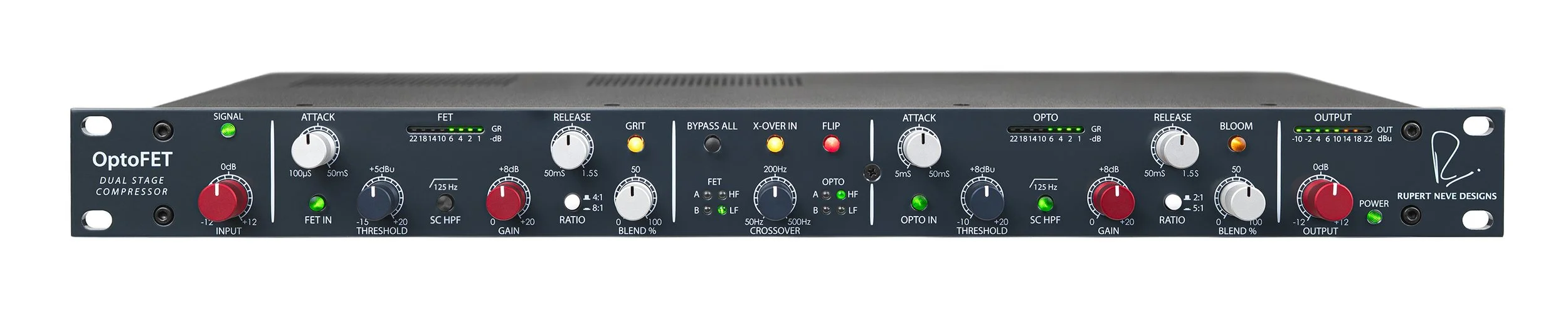
Compress Creatively.
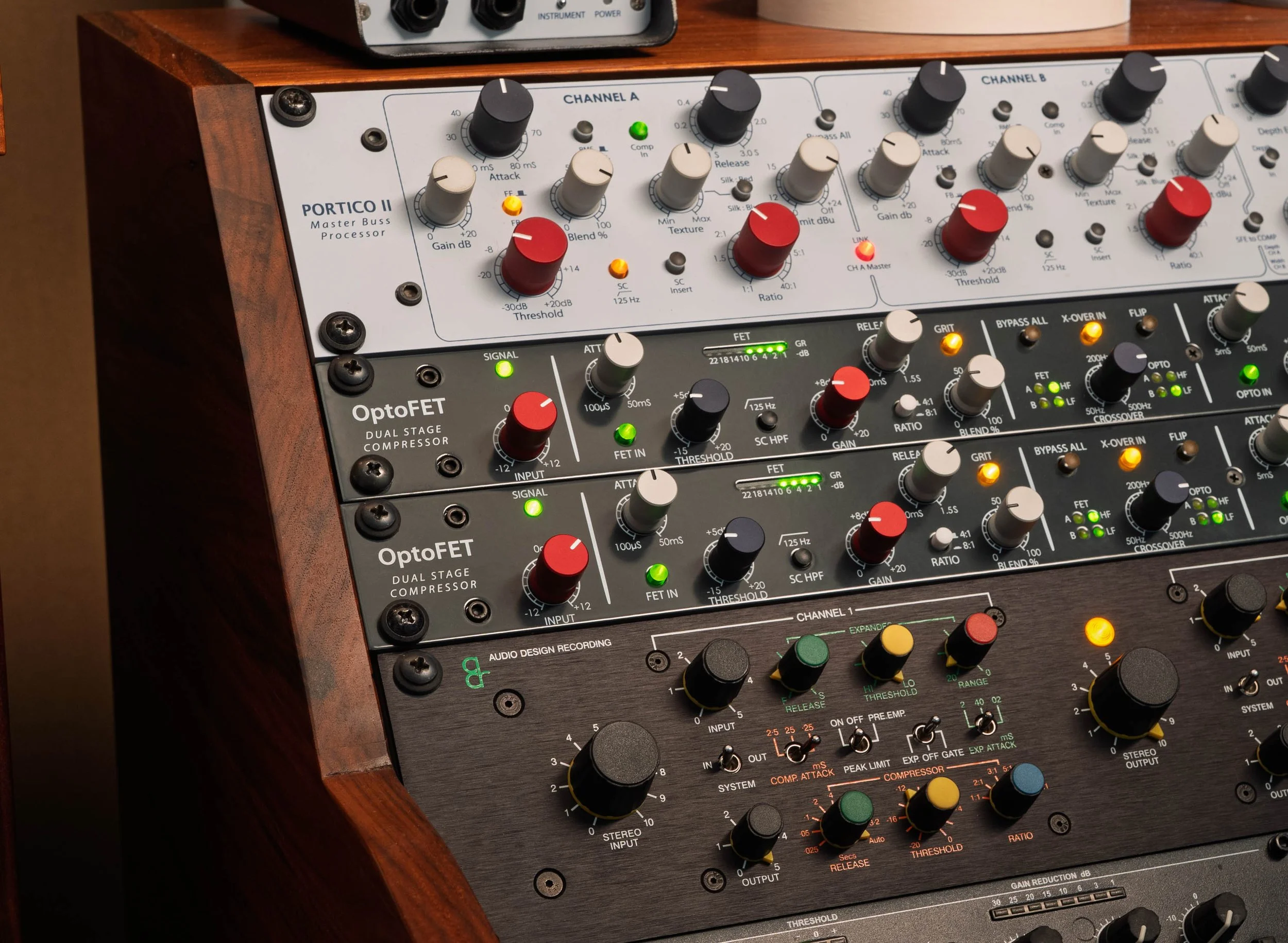
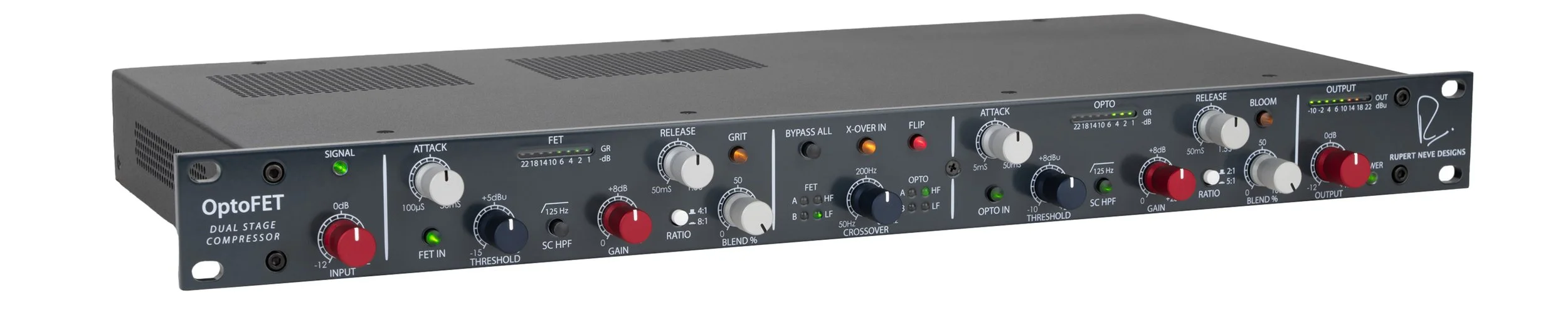
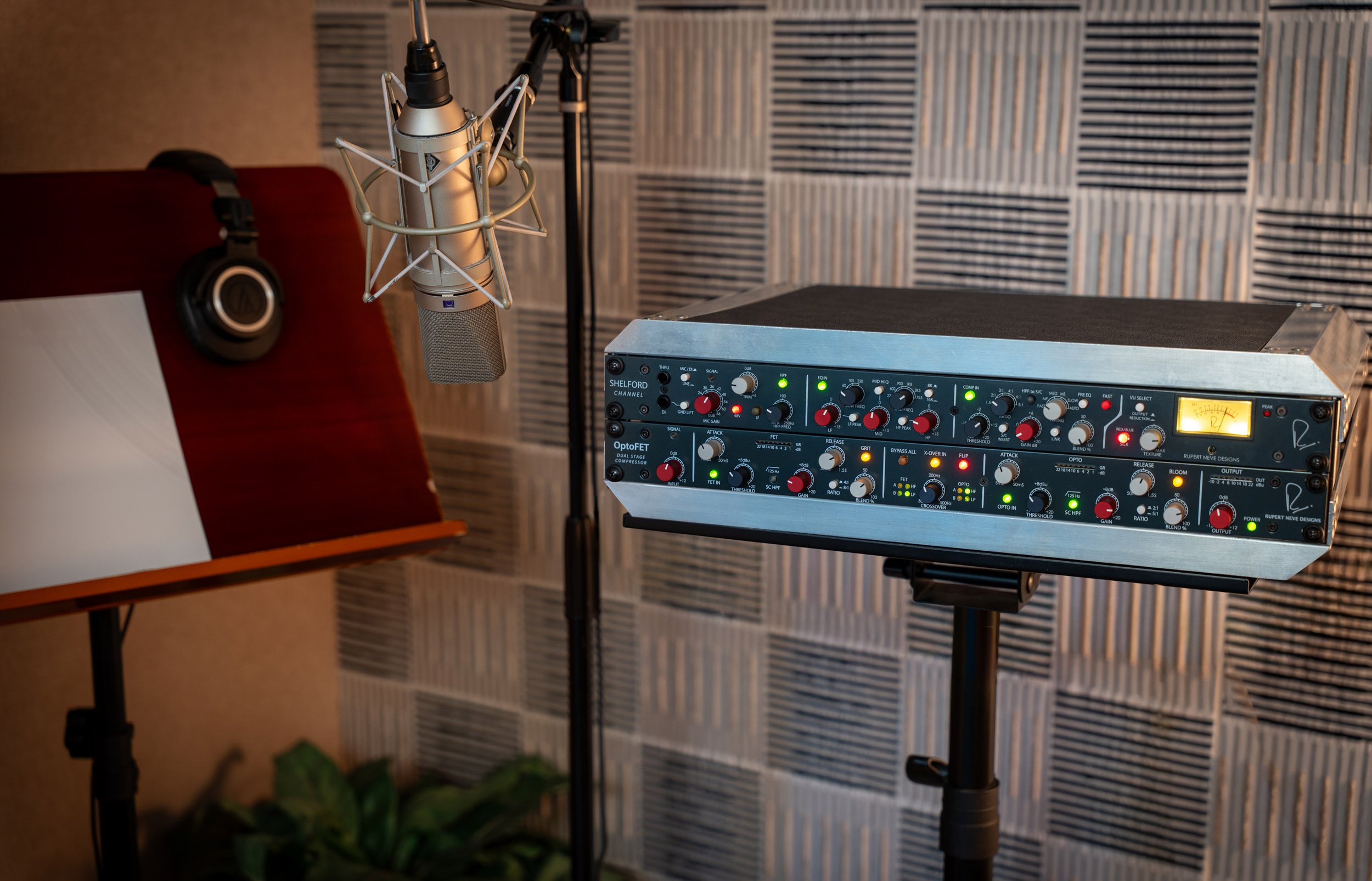
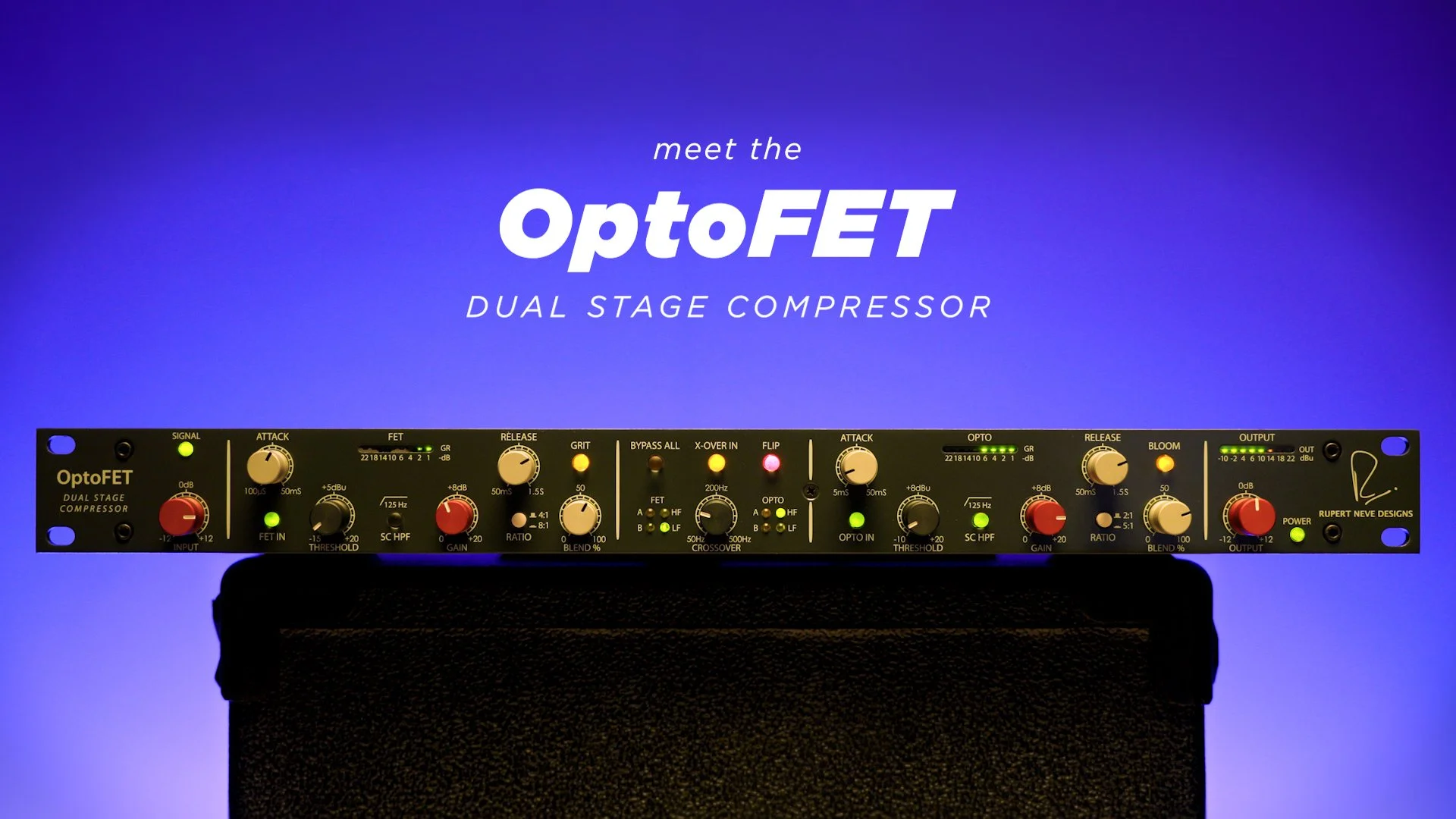
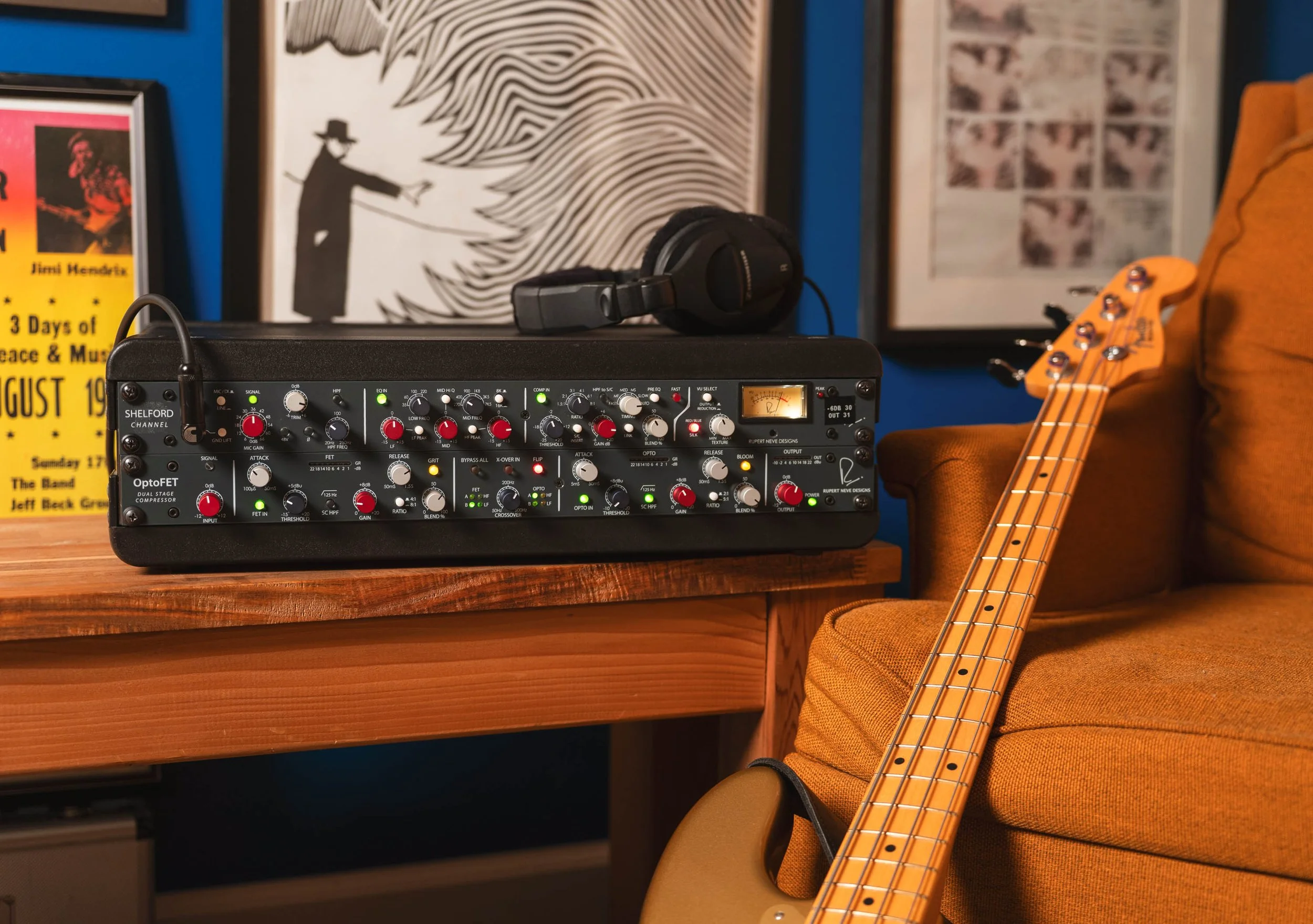
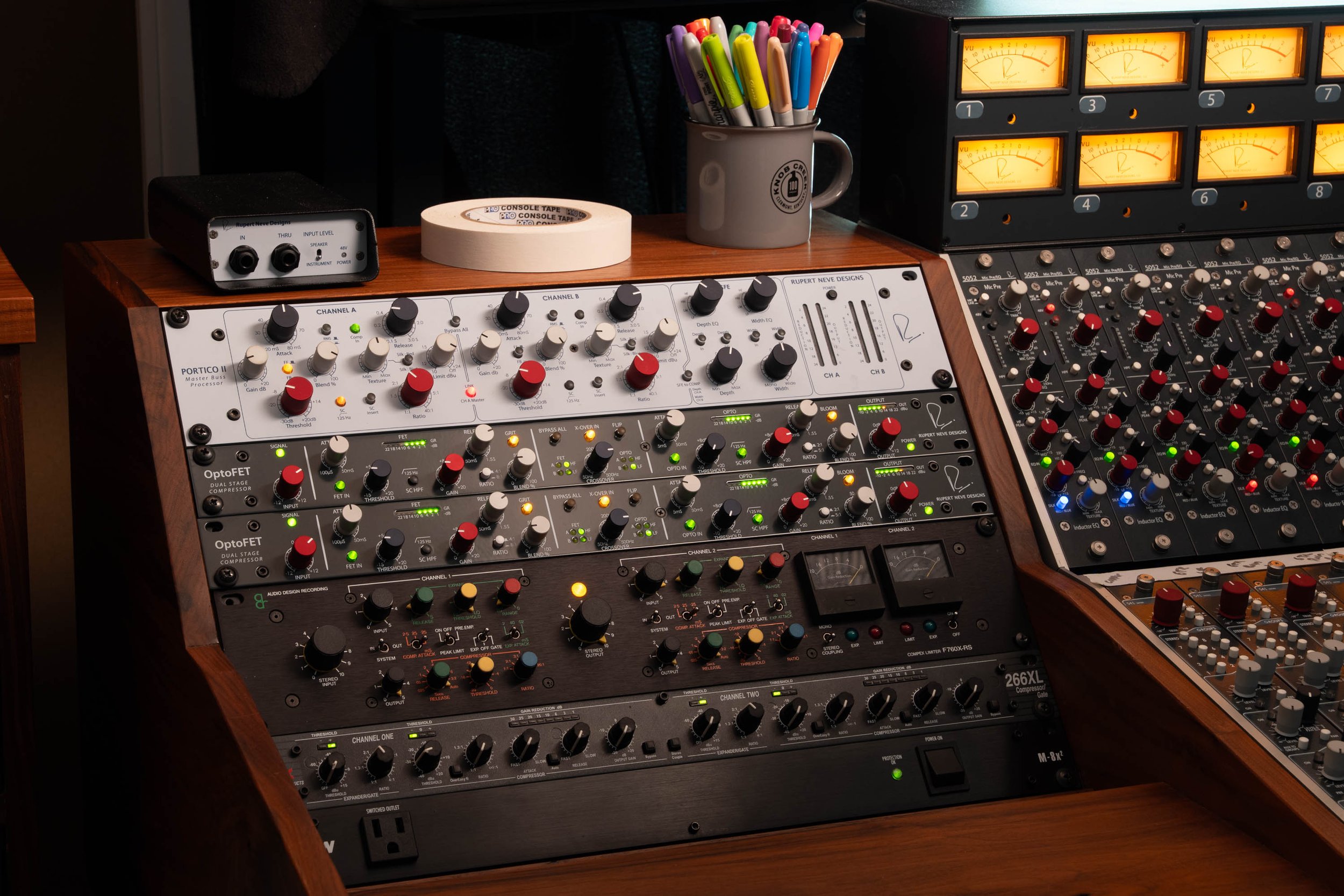
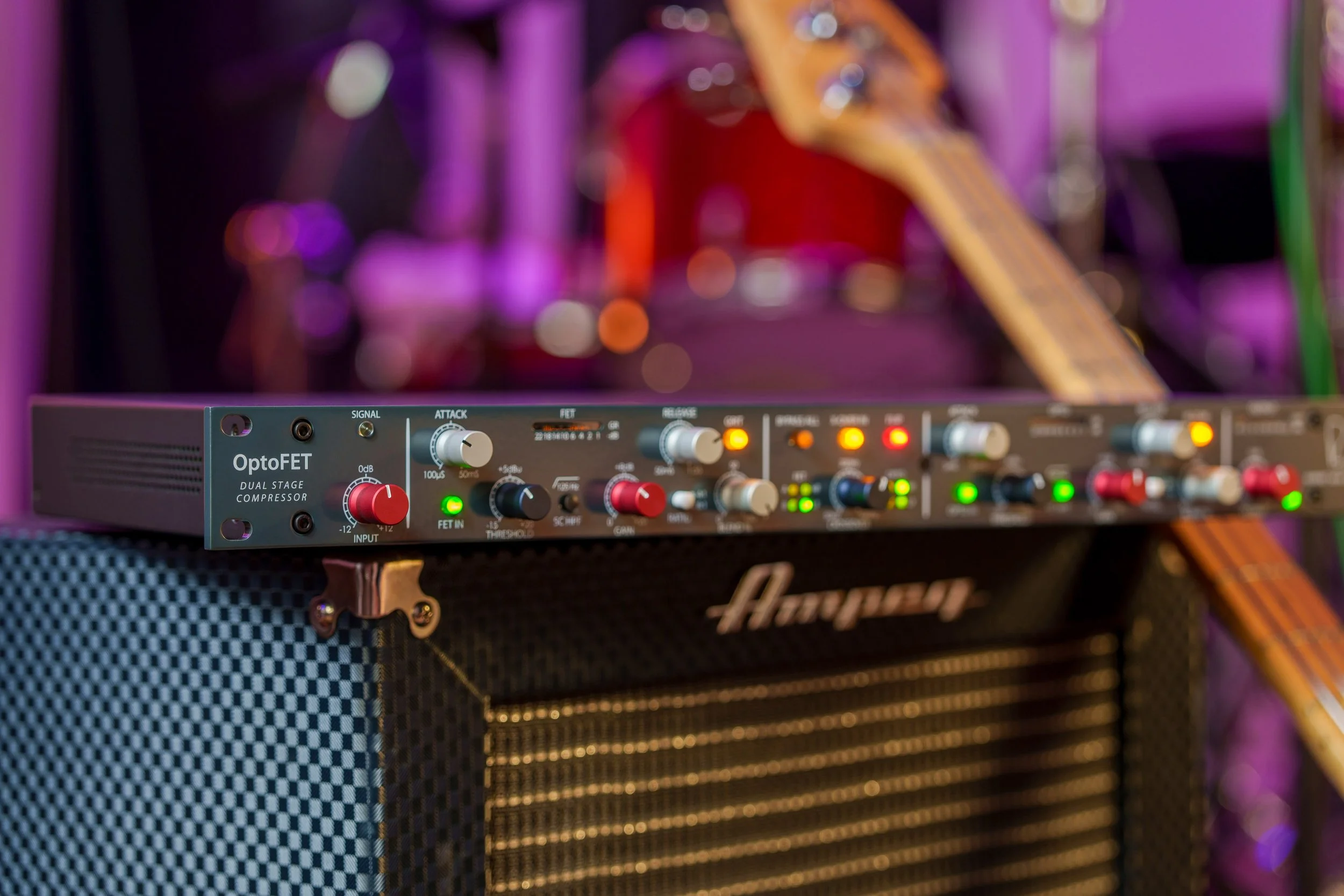
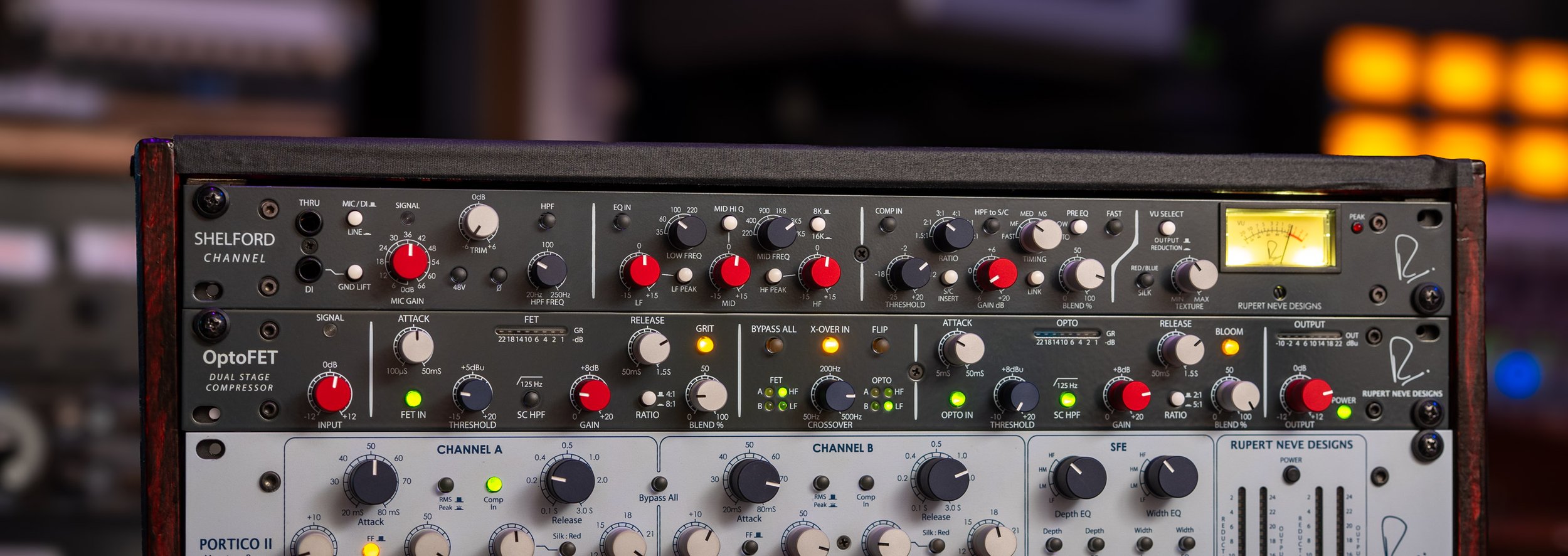
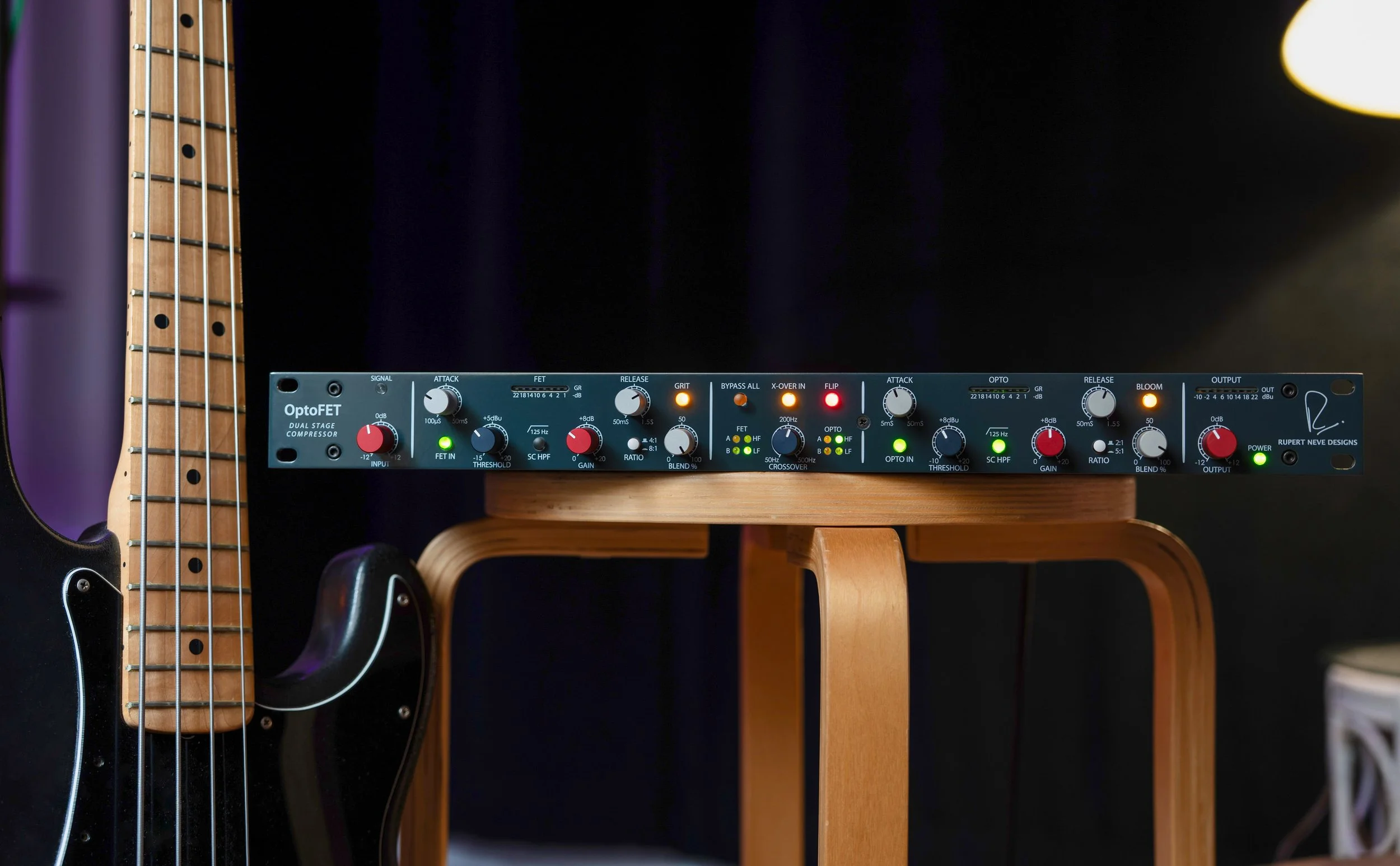
From transparent vocal smoothing to extreme envelope shaping with massive harmonic texture, the OptoFET is a highly versatile analog compressor & wave shaper that combines a newly-designed FET compression circuit with an optimized Optical compression circuit into a single rack space.
There are two primary compression modes: in Dual-Stage mode, the FET and OPTO compressors are used in series for complete dynamic control over critical sources, accomplishing a common recording & mixing technique with ease. In Dual-Band mode, each compressor is assigned to either a low or high frequency band that can then be processed independently, which expands the tone-shaping and dynamic control of the OptoFET into uncharted territory.
“Up until recently, it was a Distressor into a CL 1B for vocals...the OptoFET did everything I wanted it to do in a single rack space without having to take up 4U, which is huge. It’s an amazing tool to have.”
All New FET Compressor Design
For many years, the engineering team at RND has experimented with FET compressor designs – but it wasn’t until the OptoFET concept was solidified that releasing our first FET circuit felt ‘right’. While this FET compressor has some familiar characteristics, including ultra-fast attack times and common ratio settings, there are also several features that make it instantly feel like a Rupert Neve Designs product and nothing else.
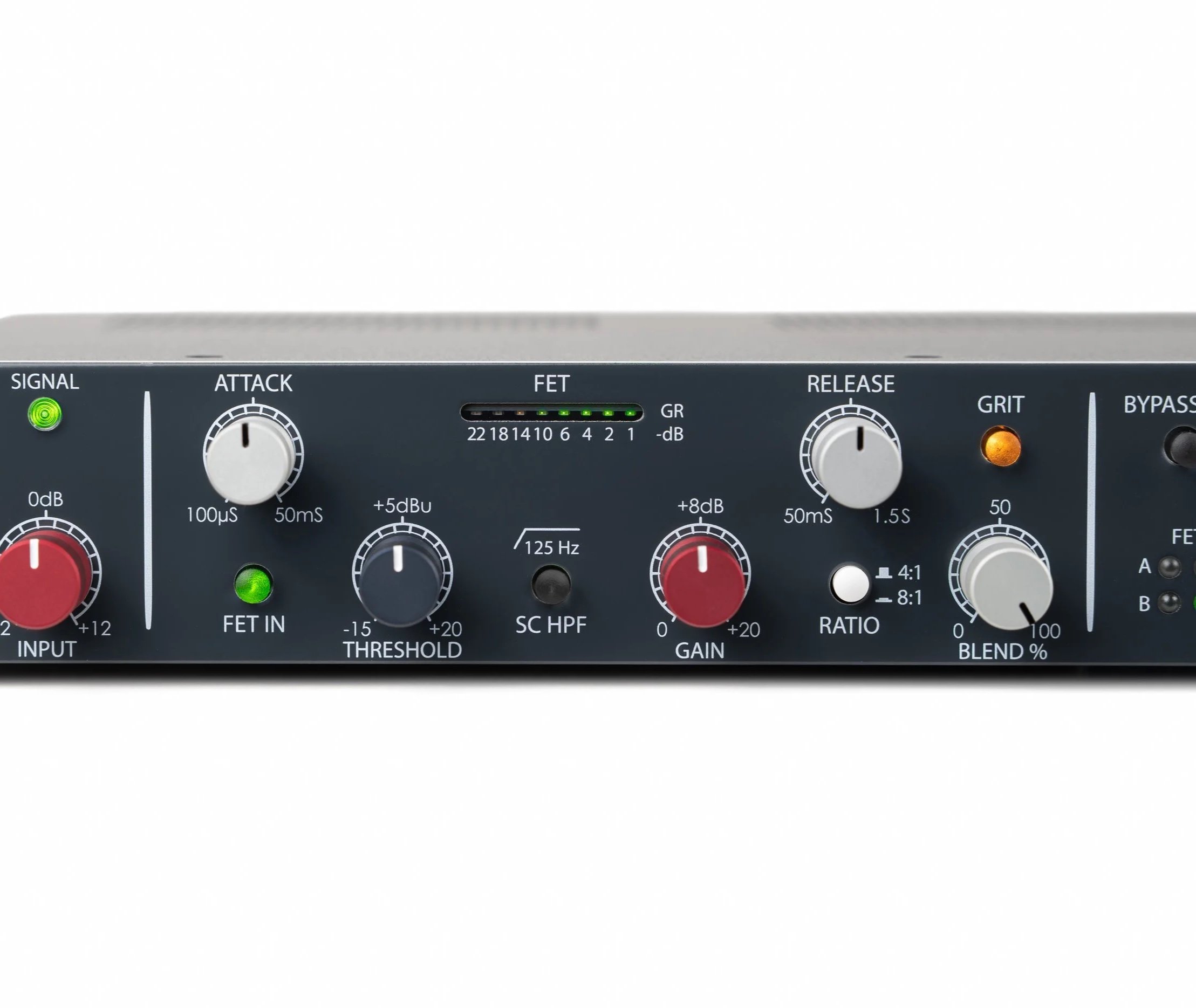
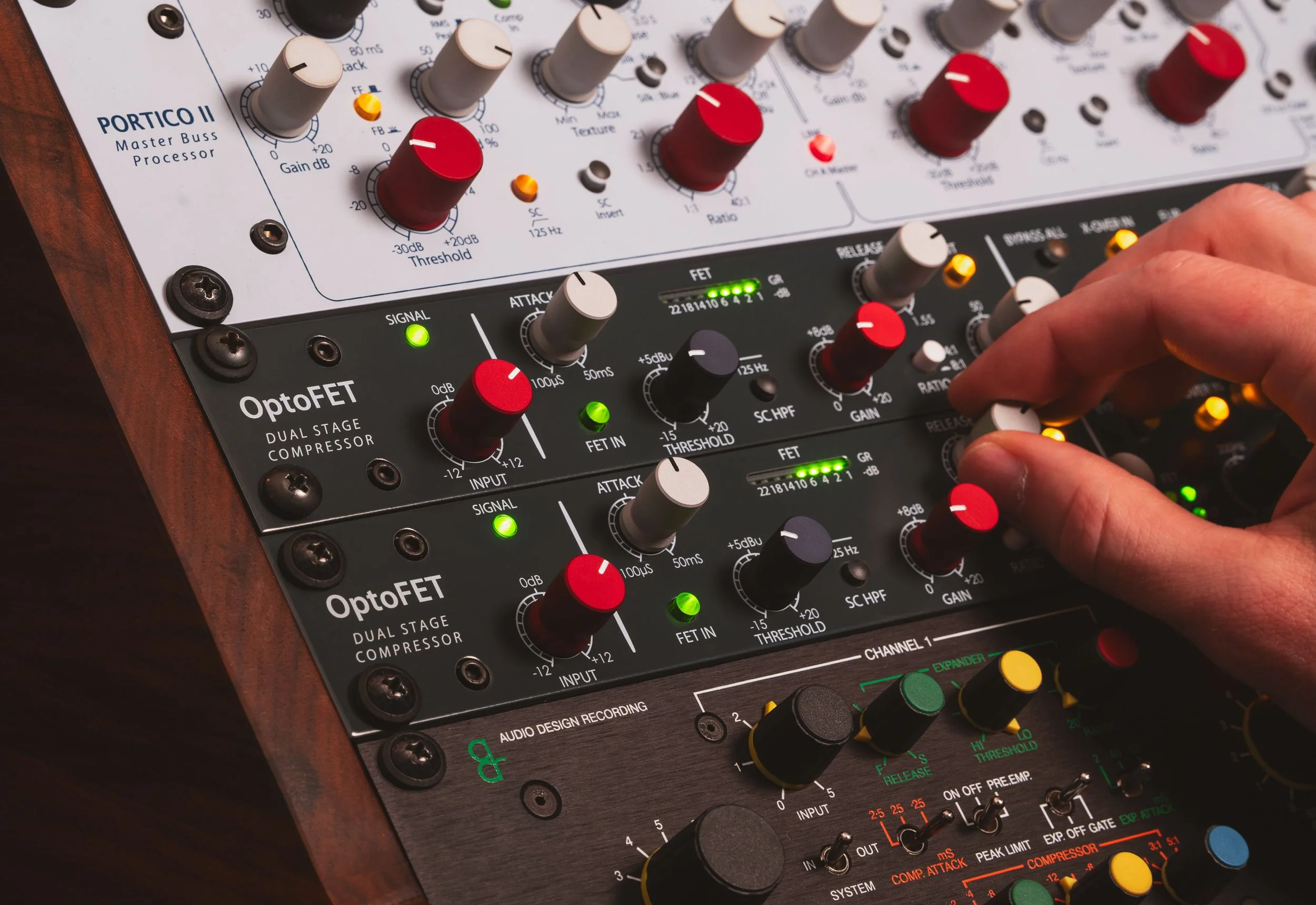
To start with, all variable controls for the OptoFET are via high quality, 31-detent potentiometers, standard to most of our current products. The FET compressor includes variable Attack (with the fastest time being a blazing 100 microseconds), Release, Threshold, +20 dB of Make-up Gain and a parallel Blend control from 0% (dry) to 100% (wet). Ratio can be set to either 4:1 or 8:1 and the 125Hz S/C high pass filter can be toggled on to leave the low end of a source untouched.

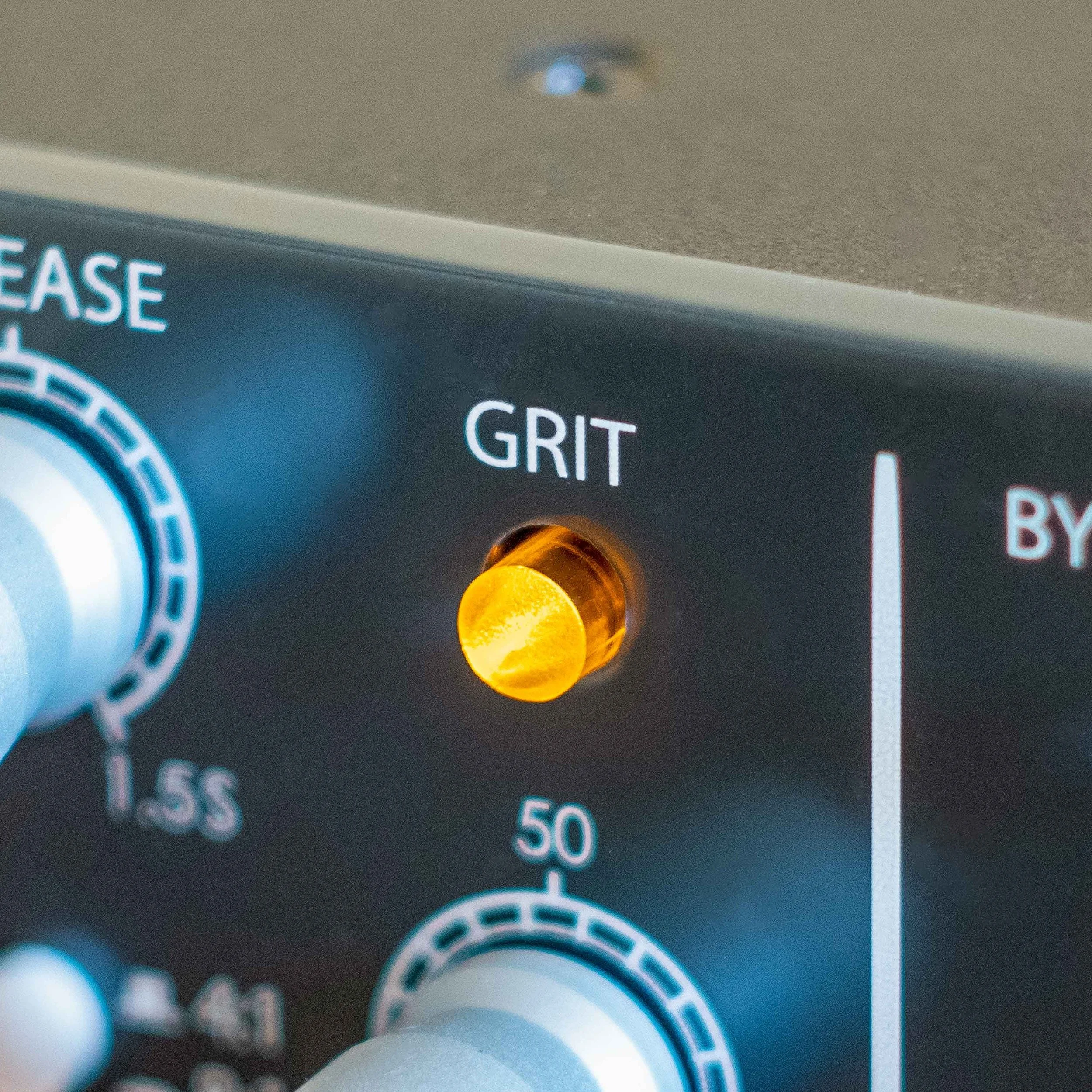
To further expand the OptoFET’s creative capabilities, a unique new ‘GRIT’ mode transforms the FET compressor into a powerful wave shaper, introducing ample harmonic distortion focused in the upper frequency range.
GRIT can be used to either slightly accentuate sources so they ‘pop’ in just the right way or transform them into something entirely new. GRIT is also especially useful when combined with the Blend control to achieve an exacting amount of distortion character for a wide range of sources.
Please note, the S/C HFP on the FET is disabled when in GRIT mode.
Optimized Optical Compressor Design
RND has created several optical compression circuits over the years – including the Color Comp in the wildly popular MBT (Master Bus Transformer) – but the circuit in the OptoFET was further developed to be the ideal complement to the faster, high-frequency focused FET compressor. In contrast, the OPTO compressor generates low-end harmonics while also having much slower attack and release settings.
For controls, the OPTO compressor includes variable Attack (starting at 5 milliseconds), Release, Threshold, +20 dB of Make-up Gain and parallel Blend controls, arranged in the same way on the front panel as the FET section. Ratio can be set to either 2:1 or 5:1, and it also includes a 125Hz S/C high pass filter.
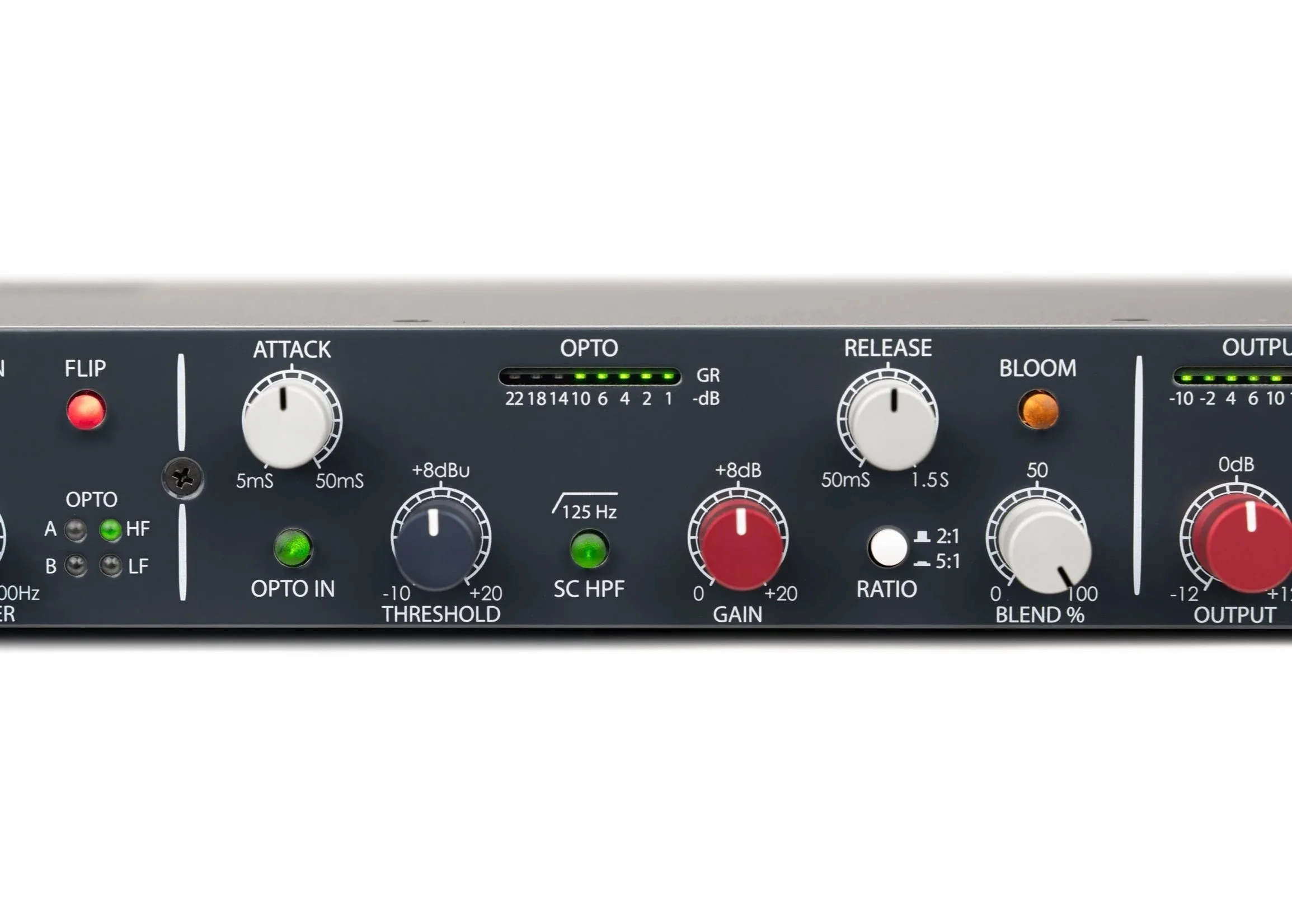

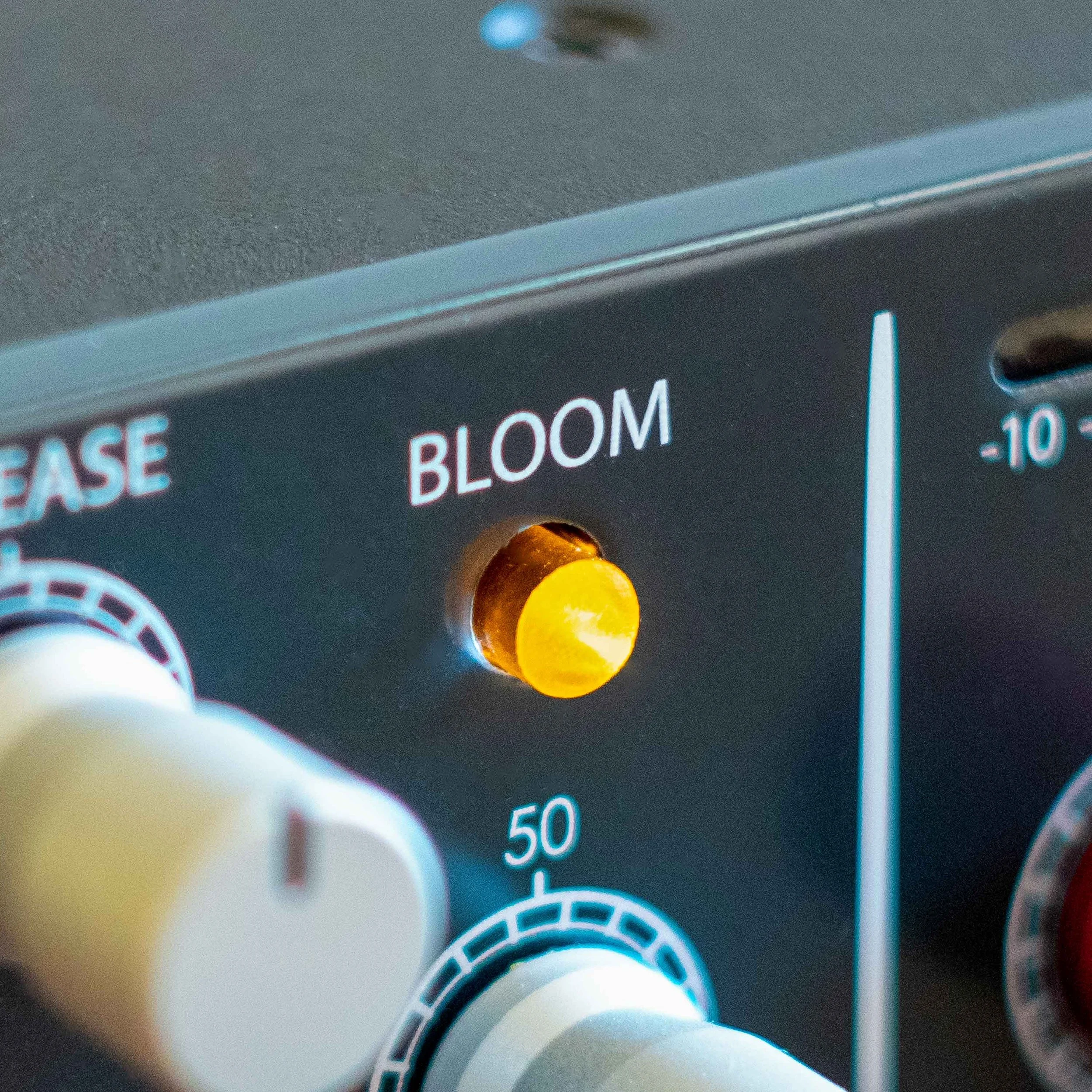
Where the FET section has its new ‘GRIT’ mode, the OPTO section contains another unique new mode called ‘BLOOM’.
With BLOOM engaged, the low-order harmonics increase significantly, instantly making sources warmer, rounder and more pronounced in the low end. BLOOM can help make final adjustments without the use of a traditional EQ, especially when used with the Blend control.
A NOTE ON GRIT + BLOOM
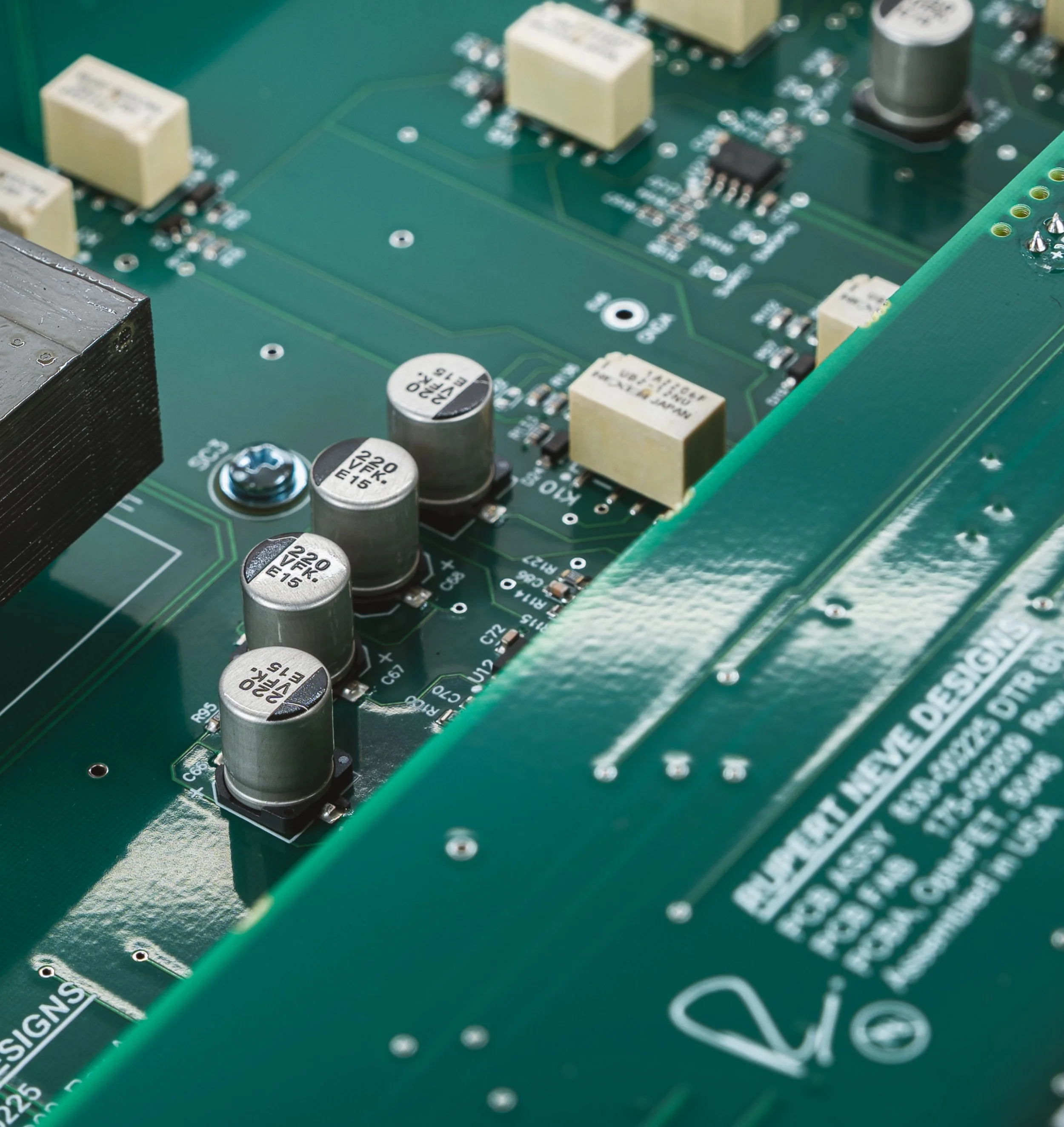
Unlike our SILK circuit, which enhances 2nd and 3rd order harmonics through saturation of the physical output transformer, the effects of the OptoFET’s GRIT and BLOOM modes are produced through the interaction of each compressor’s circuitry with newly-developed side-chain circuits. This can lead to far more dramatic wave-shaping effects, with harmonics extending far beyond those produced by SILK.
“The ability to dial in the internal balance of the drum kit from a single mono source feels magical.”
Dual Stage or Dual Band? You Decide.
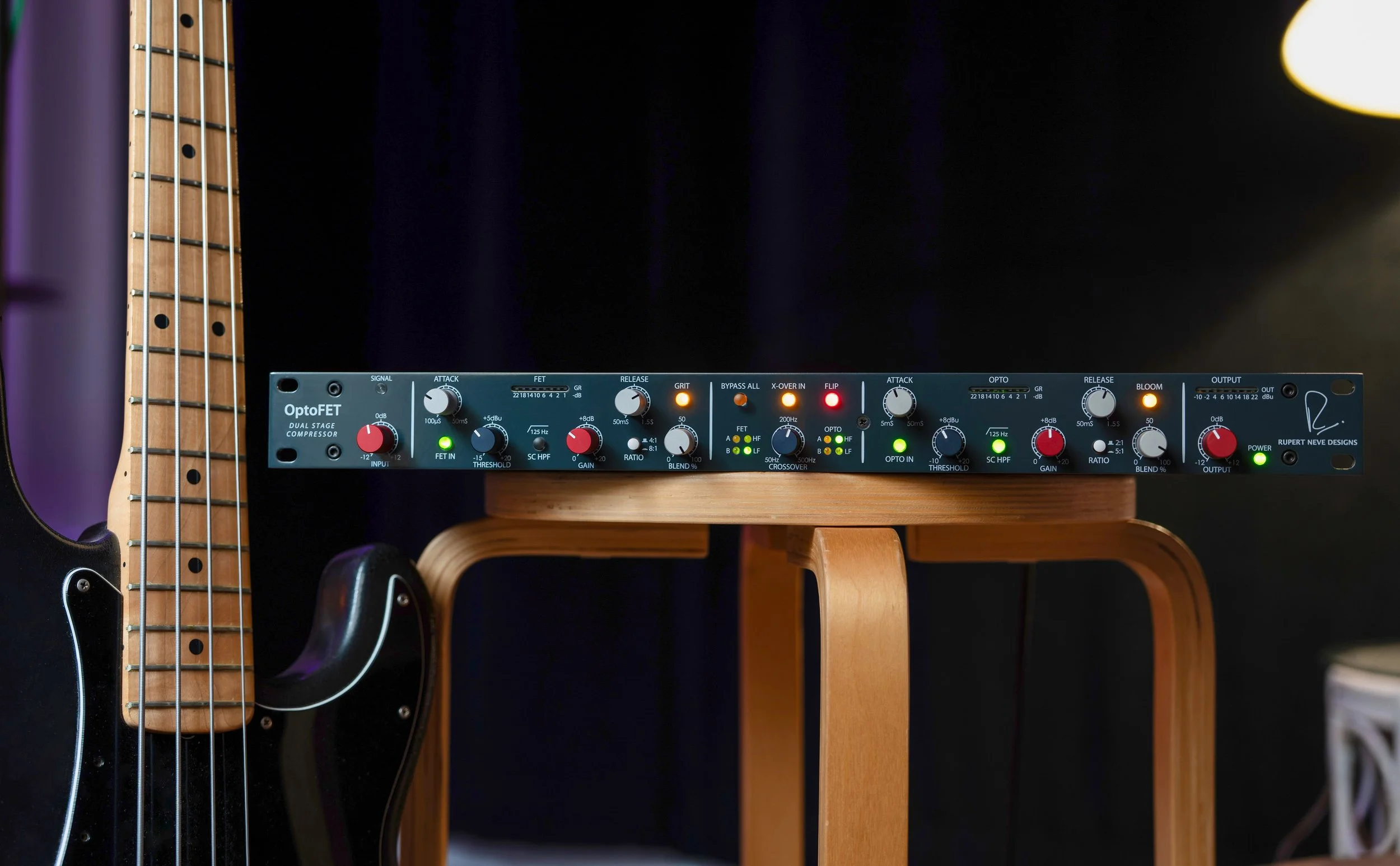
Some of the OptoFET’s most unique & powerful features lie in the global control section. In this section, the serial order of the 2 compressors can be ‘flipped’ while in Dual Stage mode: i.e. FET > OPTO or OPTO > FET. However, the OptoFET can also become a Dual Band compressor by simply pressing the ‘X-OVER IN’ button, which engages the Crossover filters and the corresponding ‘CROSSOVER’ variable frequency control. With this mode engaged, each compressor is assigned to either the low or high frequency band, allowing for independent processing of both bands simultaneously. The variable frequency selection control dials in exactly where the crossover is applied, from 50Hz to 500Hz.
The ‘FLIP’ button also works while in Dual Band mode, assigning the FET or OPTO to process either frequency band as desired. This can be especially helpful for bass sources, providing complete control over the low-end while boosting the mids and highs to dial in the perfect amount of string noise and texture.

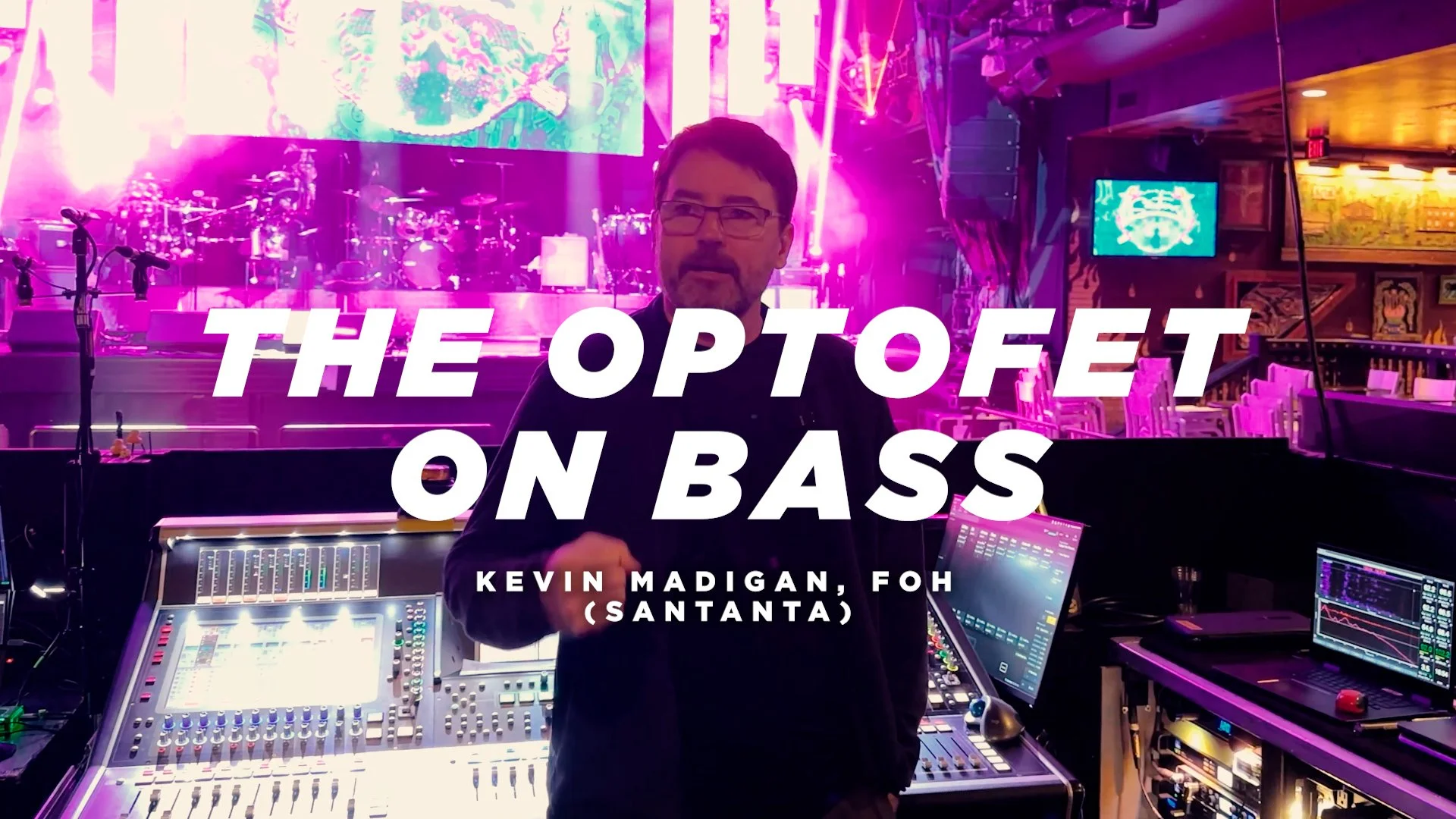
“We wanted that clear punchy sound for the bass and the OptoFET really achieved that. It put the dynamics right where I wanted them to be for the performance.”
Multiple Gain Stages
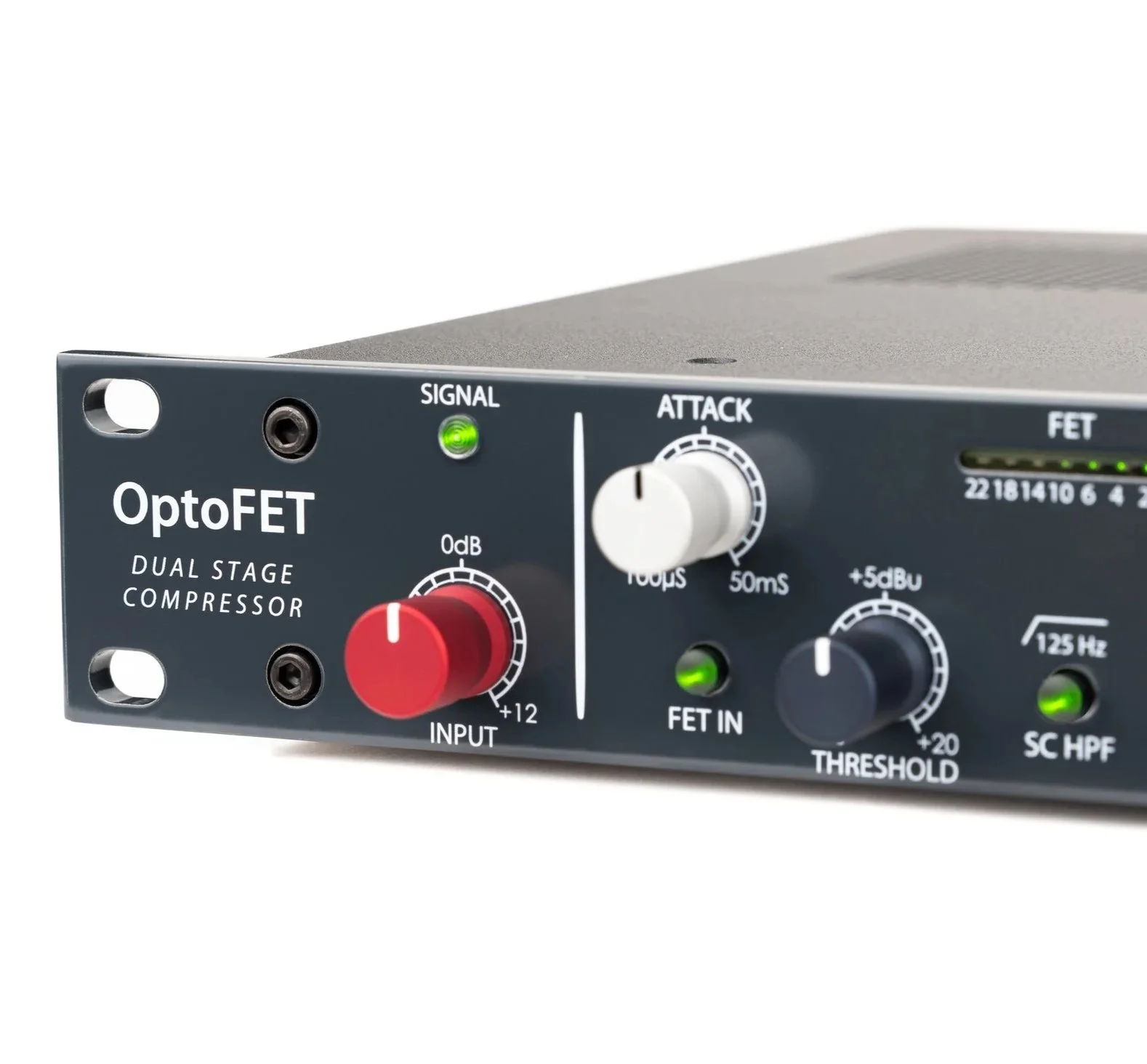
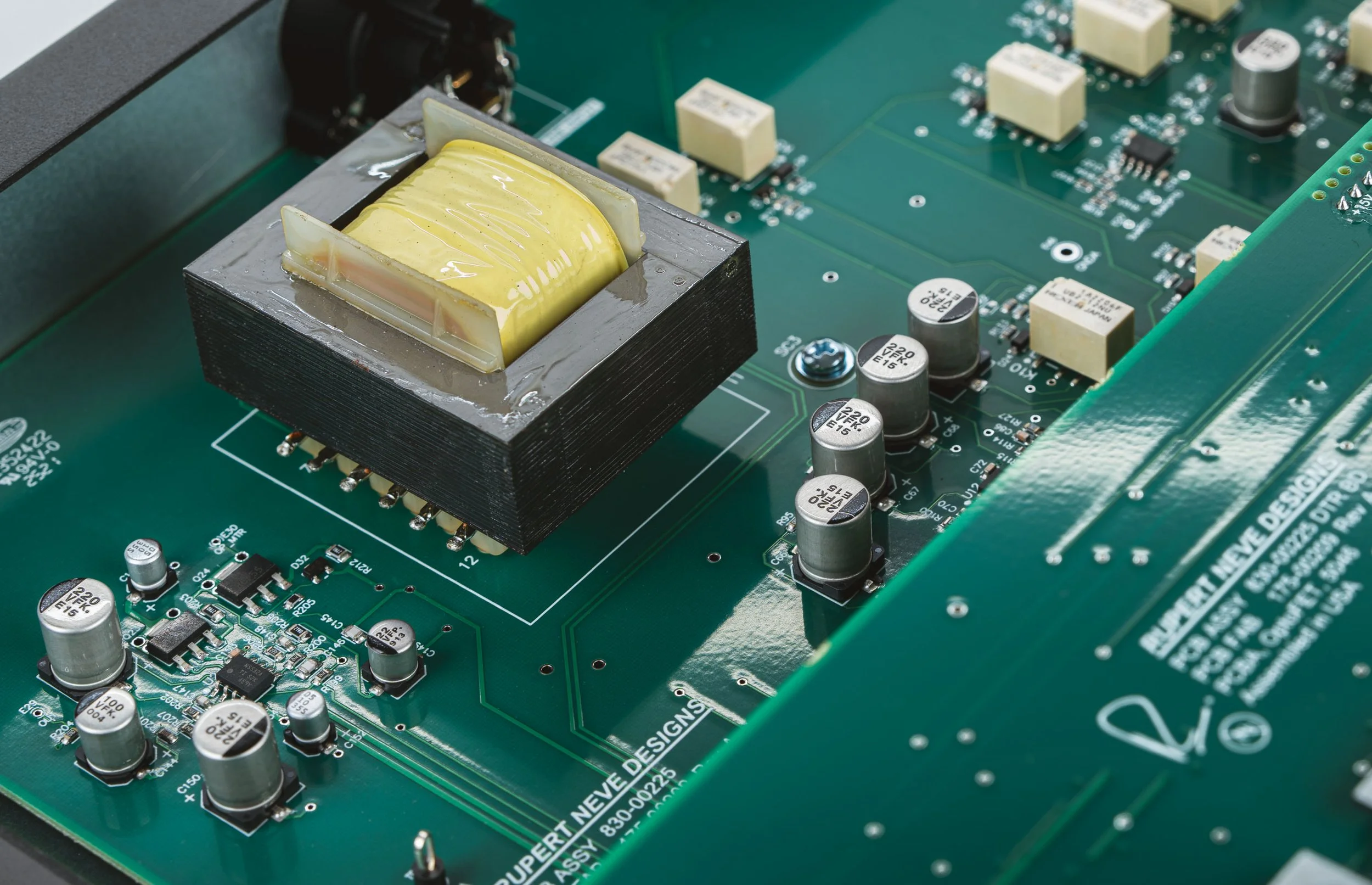
The OptoFET contains several gain staging options, starting with +/- 12dB input & output trim controls, ensuring the compression stays smooth & transparent. Alternatively, they can be used to drive the compressors, bringing out novel & interesting harmonic tones without clipping the custom transformer-balanced output stage.
In addition, each compressor has its own make-up gain, with one driving into the next in Dual-Stage mode. In Dual-Band mode, the make-up gains can be used for tonal balance adjustments ranging from subtle to dramatic. As with most exceptional compressors, many of the controls and settings are gain dependent, which is why the OptoFET begs for experimentation at every turn.
Intended for tracking, touring, mixing, mastering & sound design, the OptoFET provides immense control over the dynamics and tonal shape of your source.
Compress creatively with the OptoFET.



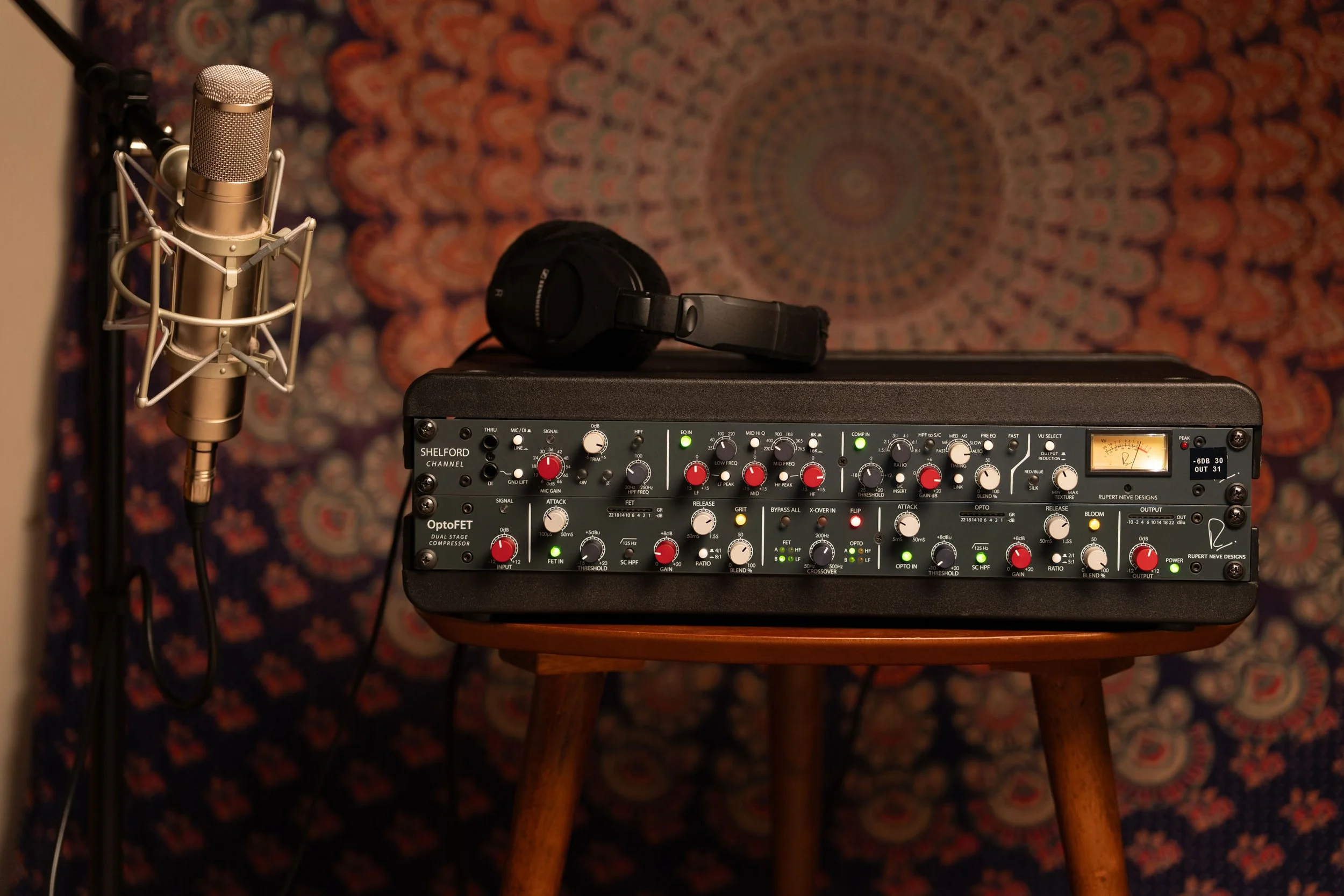
All new FET compressor design and optimized OPTO compressor design in a single 1U unit
Flexible Dual-Stage or Dual-Band compression modes
Independent, comprehensive control sets for each compressor for unprecedented levels of dynamic and harmonic control
All-new GRIT and BLOOM modes greatly enhance harmonic content and allow for source wave shaping
Independent Blend controls for each compressor, making parallel processing a breeze
Dual Stage mode: Easily flip the order of each compressor with the touch of a button
Dual Band mode: Crossover control allows each compressor to process either frequency band (low or high) independently
Make-up gains can be used with crossover for tonal balance adjustments
Combine 2 units for extremely versatile dual mono processing on stereo sources
Global Input & Output Trim for total control over gain staging and harmonics
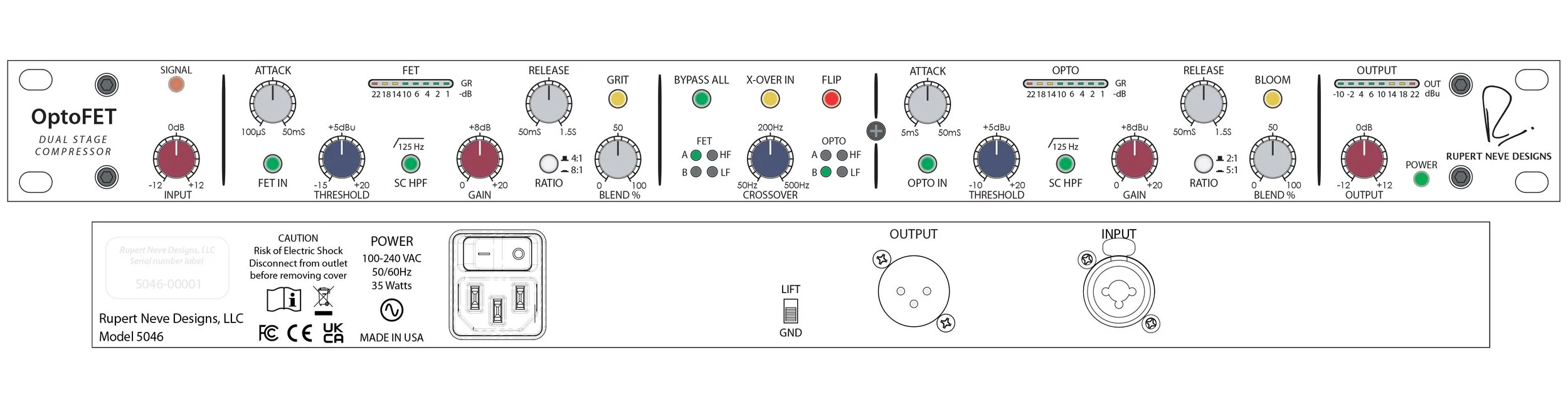
FET COMPRESSOR
ATTACK
31-detent potentiometer that controls the FET compressor attack time within a range of 100uS to 50mS.
FET IN
Illuminated push-button switch that engages the FET compressor, making it possible to make quick A/B comparisons.
THRESHOLD
31-detent potentiometer that controls the FET compressor threshold range from +20dBu to -15dBu.
GR METER
8 segment LED meter that indicates FET compressor gain reduction in dB.
SC HPF
Illuminated push-button switch that engages the side-chain high-pass filter. The HPF has a 12dB/octave slope that helps control the amount of low frequency energy hitting the compressor side-chain when engaged. The corner frequency of the HPF is fixed at 125Hz.
GAIN
The GAIN control is a 31-detent potentiometer designed to add make-up gain to the compressed signal.
RELEASE
31-detent potentiometer that controls the FET compressor release time within a range of 50mS to 3S.
RATIO
Push-button switch that selects between a 4:1 or 8:1 ratio.
GRIT
Illuminated push-button switch that adjusts the S/C detection circuit to generate more harmonic content.
BLEND
The BLEND control is a 31-detent potentiometer that allows the user to adjust the ratio of the compressed (wet) signal with the uncompressed (dry) signal to achieve parallel compression. Turning the BLEND control fully count- er-clockwise adjusts the mix toward the fully dry, uncompressed signal. Turning the BLEND control fully clockwise adjusts the mix toward the fully wet, compressed signal.
OPTO COMPRESSOR
ATTACK
31-detent potentiometer that controls the OPTO compressor attack time within a range of 5mS to 50mS.
OPTO IN
Illuminated push-button switch that engages the OPTO compressor, making it possible to make quick A/B comparisons.
THRESHOLD
31-detent potentiometer that controls the OPTO compressor threshold range from +20dBu to -10dBu.
GR METER
8 segment LED meter that indicates OPTO compressor gain reduction in dB.
SC HPF
Illuminated push-button switch that engages the side-chain high-pass filter. The HPF has a 12dB/octave slope that helps control the amount of low frequency energy hitting the compressor side-chain when engaged. The corner frequency of the HPF is fixed at 125Hz.
GAIN
The GAIN control is a 31-detent potentiometer designed to add make-up gain to the compressed signal.
RELEASE
31-detent potentiometer that controls the OPTO compressor release time within a range of 50mS to 3S.
RATIO
Push-button switch that selects between a 2:1 or 5:1 ratio.
BLOOM
Illuminated push-button switch that adjusts the S/C detection circuit to generate more harmonic content.
BLEND
The BLEND control is a 31-detent potentiometer that allows the user to adjust the ratio of the compressed (wet) signal with the uncompressed (dry) signal to achieve parallel compression. Turning the BLEND control fully count- er-clockwise adjusts the mix toward the fully dry, uncompressed signal. Turning the BLEND control fully clockwise adjusts the mix toward the fully wet, compressed signal.
GLOBAL CONTROLS
SIGNAL
LED that illuminates GREEN when input signal is present and RED when near clip point.
INPUT
31-detent potentiometer that controls the input level within a range of +/-12 dB.
BYPASS ALL
Illuminated push-button switch that engages a hard-wire bypass for both the FET and OPTO compressor sections.
X-OVER IN
Illuminated push-button switch that engages cross-over filters and the corresponding CROSSOVER frequency control.
FLIP
Illuminated push-button switch that places the OPTO compressor before the FET compressor in the signal path.
FET STATUS
LEDs that indicate where the FET compressor is located in the signal path (A=1st, B=2nd) and whether it is compressing the LF (low frequency) or HF (high frequency) band when X-OVER is engaged.
CROSSOVER
31-detent potentiometer that selects the corner frequency point of the crossover filters.
OPTO STATUS
LEDs that indicate where the OPTO compressor is located in the signal path (A=1st, B=2nd) and whether it is compressing the LF or HF band when X-OVER is engaged.
OUTPUT METER
8 segment LED meter that indicates final output level in dBu.
OUTPUT
31-detent potentiometer that controls the output level within a range of +/-12 dB.
POWER
LED that illuminates GREEN when the power is ON.
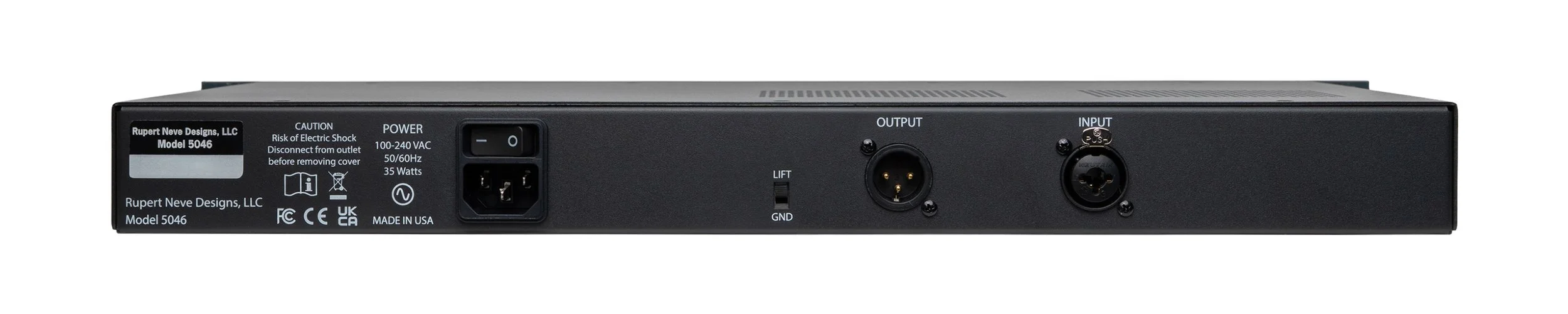
POWER: IEC standard 3 pin grounded switched AC power inlet with an input range of 100-240 VAC. 70 Watts maximum AC power consumption.
GND LIFT: Slide switch that lifts XLR Output Pin 1 from chassis ground to minimize ground loops.
OUTPUT: Balanced XLR output with custom Rupert Neve Designs transformer capable of handling up to +24 dBu at 1kHz.
INPUT: Balanced XLR combo jack input capable of handling up to +24 dBu at 1kHz.
REVIEWS
“The OptoFET invites comparison to the classic Universal Audio 1176 and LA-2A combination. In most cases, I’m confident it can stand in for that revered pairing and achieve very similar – if not more flexible – results. The OptoFET exceeds the ranges of those classics with its expanded routing, sidechain flexibility, and Blend controls. Each compressor sounds excellent on its own, but together they unlock an extremely powerful and musical tool.”
Adam Kagan, Tape Op Magazine
Issue #171, Jan/Feb 2026
"...this is a bold stride outside of RND’s comfort zone, and they’re to be commended for that. More importantly, this is an incredibly versatile, beautiful-sounding piece of kit, and it almost certainly offers something your existing gear doesn’t. If you’re in the market for a high-quality analogue compressor, it’s worth a test drive!"
Matt Houghton, Sound On Sound
February 2026
“On a mono drum kit microphone – for example, a Coles 4038 in front of the kit as an overall picture mic – the OptoFET shines here more than anywhere else. I’m not sure I could achieve the same results with any other analog unit without a big chain of patching and headaches.
The ability to dial the internal balance of the kit from a single mono source feels magical. It’s incredibly useful to compress and even distort the fundamental shell frequencies without the cymbals and metalwork splashing around. We achieved this by having the FET side handle the low end with GRIT enabled, while keeping the Opto on a gentler setting.
That level of control let me blend in more ambient mics for depth and power without harshness or messy cymbals. The separate Gain and Blend knobs on each side were a real bonus — I often found myself pushing the lows forward and tucking the highs back.
Overall I love this unit. It captures the spirit of the classic 1176 - LA2A chain but with much more creative possibilities.”
Mike Crossey
The 1975, Arctic Monkeys
“I own several of the top compressors and this beat them all on vocals. I use the FET section to hit the fast transients with a fast attack, fast release then use the opto section to tame the slower sections. The icing on the cake is to use the mix knob on each to retain a bit more openness. I do about 80% on each to get a perfect blend of added weight, presence, detail and air. Where this beats my other 1176 type FET compressor is the retention of detail in the mids. Sometimes I also find that FET comps can be a little too fast for my liking, the slowest attacks are too fast. This is not an issue with the optoFET. It can go as slow as I need. If you're going to get one compressor, especially for vocals, this is the one.”
Customer Review via Front End Audio
“Up until recently, it was a Distressor into a CL 1B for vocals...the OptoFET did everything I wanted it to do in a single rack space without having to take up 4U, which is huge. It's an amazing tool to have.”
James Butera, FOH Engineer
Halsey
“The OptoFET is my new favorite addition to my vocal chain. It’s easier than ever to stack up different vocal colors quickly and cleanly. It’s perfect to travel with, without the fear of it breaking or needing repair. What more could you ask for?”
Denis Kosiak, Mixer / Producer
Khalid, Jelly Roll, Tate McRae, Morgan Wallen
“We wanted that clear punchy sound for the bass and the OptoFET really achieved that. It put the dynamics right where I wanted them to be for the performance.”
Kevin Madigan, FOH Engineer
Santana
“Cutting modern vocals on the go, you expect to give up some quality for portability and convenience; except I can’t find a single compromise RND made with the OptoFET.
It’s a fantastic sounding FET compressor, which honestly would’ve been enough. It might be the best in class opto compressor, which is even cooler. They’ve got a blend knob for each, which basically makes it idiot proof, and it has proper input and output metering which is just something that everything should have these days and I can’t figure out why they don’t. And somehow, they fit all of that into a SINGLE RACK SPACE. It does everything I’ve been asking for out of a compressor for the last 20 years.
BUT THEN they added this whole crossover situation, which gives absurd creative compression and even EQ control. I didn’t know i needed that. Turns out I do. Pretty neat trick. Well done RND.”
Matt Beckley, Vocal Producer / Guitarist
Camila Cabello, Ke$ha, Britney Spears
“Double compression is a widely used trick for mixing vocals. And the OptoFET is an ideal tool for directly and quickly reproducing this effect. Levels are rebalanced in the same way you’d expect using two compressors chained one after the other: one smoothes out dynamics and fast transients, while the other levels out the overall volume. In fact, the different ratios of the two stages complement each other perfectly: one just planes what the other couldn’t contain. The signal gains in impact, for a more compact result with reinforced, well-structured low mids. Whether in pop, folk, jazz or rock, vocal intelligibility is enhanced, and follow-ups are no longer superfluous.”
“And speaking of rock, the Grit is fantastic for accentuating the singer’s already snarling timbre. Dynamics are well slashed, but the track gains greatly in power. We love it!”
“…the range of possibilities is literally enormous, and the sonic palette is immense.”
Nico Sacman, Audiofanzine
April 2026
SPECIFICATIONS & DOWNLOADS
Note: All specifications are typical.
XLR Line IN to XLR Line OUT (Compressor Bypassed)
Input Impedance: 10 kΩ
Output Impedance: 40 Ω
Maximum Input Level @ 1 kHz: +24 dBu
Maximum Output Level @ 1 kHz: +24 dBu
Noise (22 Hz - 22 kHz BW): -96 dBu
Frequency Response:
6 Hz to 70 kHz: +/- 0.1 dB
<5 Hz to 183 kHz: -3 dB
THD+N @ 1 kHz:
0 dBu: 0.002%
+20 dBu: 0.0006%
FET COMPRESSOR SPECIFICATIONS
Noise (22 Hz - 22 kHz BW): -82 dBu
Attack Time: 100μS – 50mS
Release Time: 50mS - 1.5S
OPTO COMPRESSOR SPECIFICATIONS
Noise (22 Hz - 22 kHz BW): -93 dBu
Attack Time: 5mS – 50mS
Release Time: 50mS - 1.5S
Note: Compressor time constant ranges represent the full range achievable within all front panel settings.
UNIT DIMENSIONS
1RU: 19” W x 8.25” D x 1.75” H
(48.3 cm W x 21 cm D x 4.5 cm H)
UNIT WEIGHT
8 lbs. (3.6 kg)
SHIPPING DIMENSIONS
24” W x 13” D x 4” H
(61 cm W x 33 cm D x 10.2 cm H)
SHIPPING WEIGHT
9 lbs. (4.1 kg)
FREQUENTLY ASKED QUESTIONS
Definitely! Engaging the ‘FLIP’ button moves the OPTO compressor before the FET compressor in the signal path.
It switches the OptoFET from ‘dual-stage’ mode to ‘dual-band’ mode, assigning each compressor to either the low or high frequency band of the audio signal. You can then use the ‘CROSSOVER’ control to adjust where the low & high frequency bands begin, allowing for maximum tonal shaping control.
With SILK, we have always relied on our custom-designed transformers to generate musical harmonics. With GRIT & BLOOM, harmonics are generated by the FET & OPTO compression circuits themselves, specifically in how they interact with the side chain. This gives GRIT & BLOOM a sonic character that is noticeably different from SILK, but equally useful in a variety of ways.
No, these filters only apply to the control signal that feeds each compressor circuit, allowing you to leave the low end intact while compressing the rest of the frequency range.
GRIT mode drastically alters how the side chain behaves, and keeping the S/C HPF turned off provides the best performance while this mode is engaged.
Absolutely. The FET and the OPTO compressors each have their own dedicated BLEND control, allowing you to use either (or both) compressor in parallel.
GRIT and BLOOM change the respective behaviors of the entire FET and OPTO circuits themselves, and then these circuits can be blended with the dry (uncompressed) signal as desired via each side’s respective BLEND control.
In other words: On the FET side, the BLEND knob controls the mix of the entire FET compression circuit – not just GRIT. Likewise, on the OPTO side it controls the entire Optical compression circuit, not just BLOOM.
The following may also be of interest:
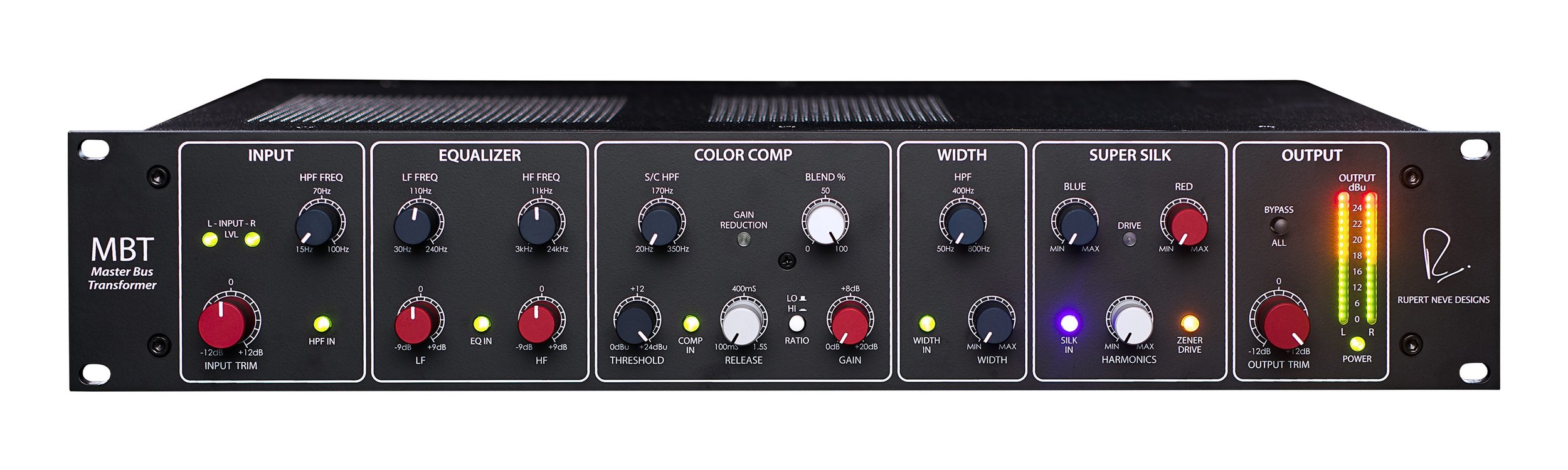
Master Bus Transformer
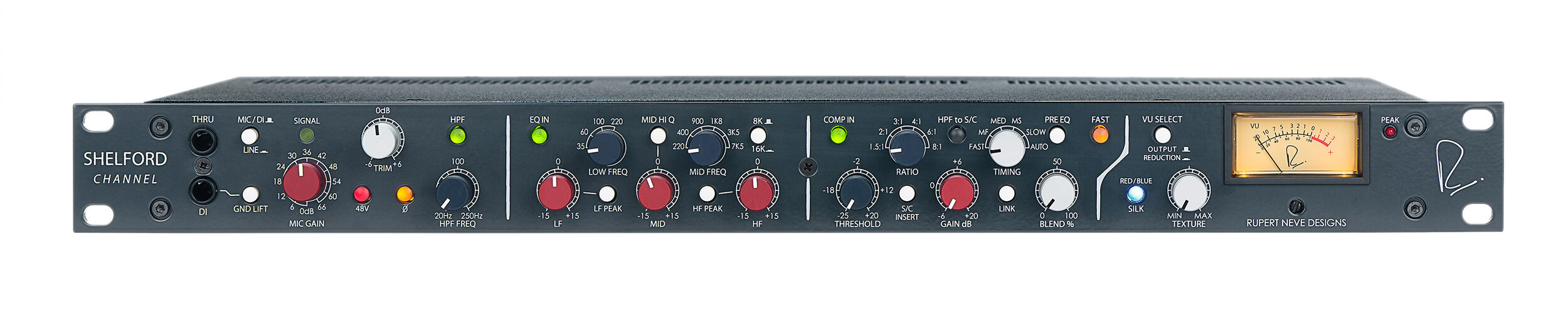
Shelford Channel
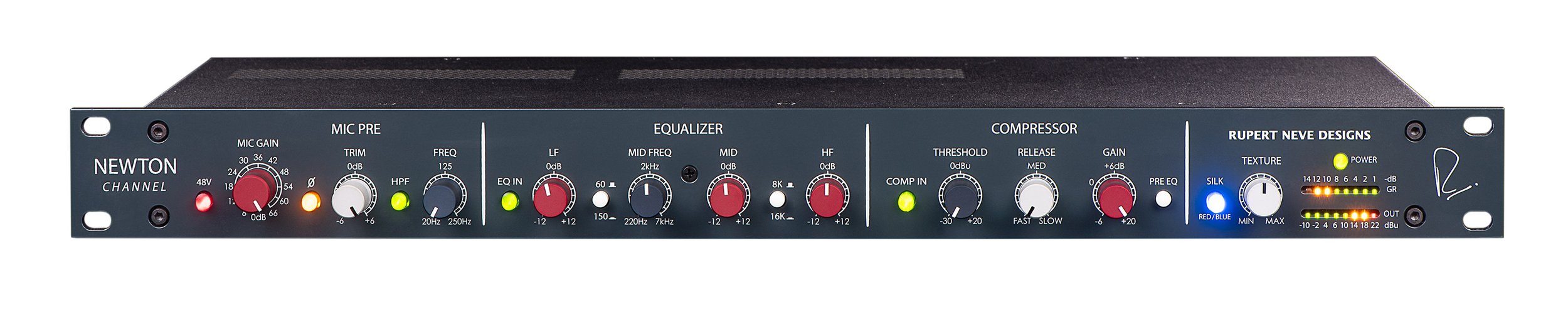
Newton Channel
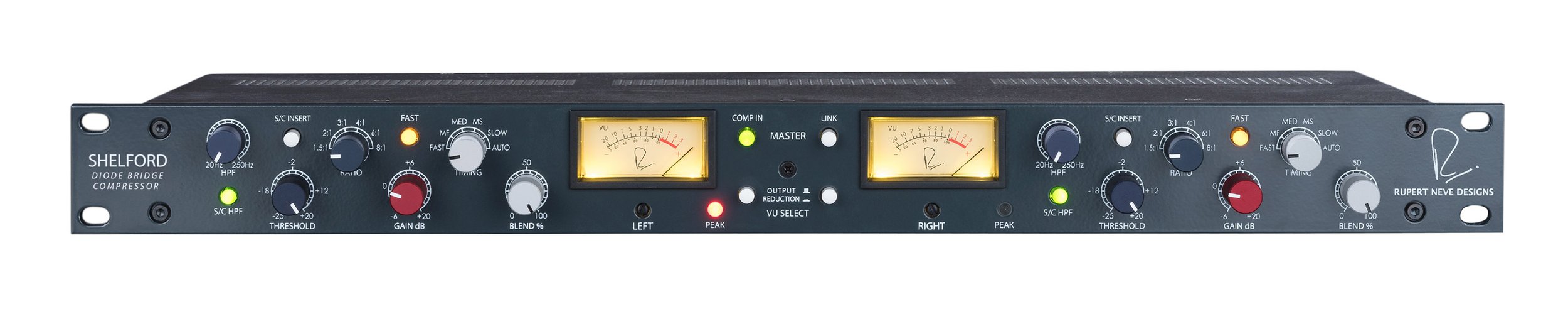
Shelford Diode Bridge Compressor